

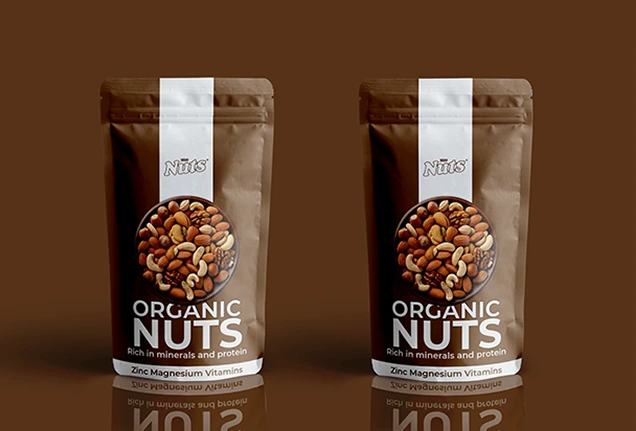
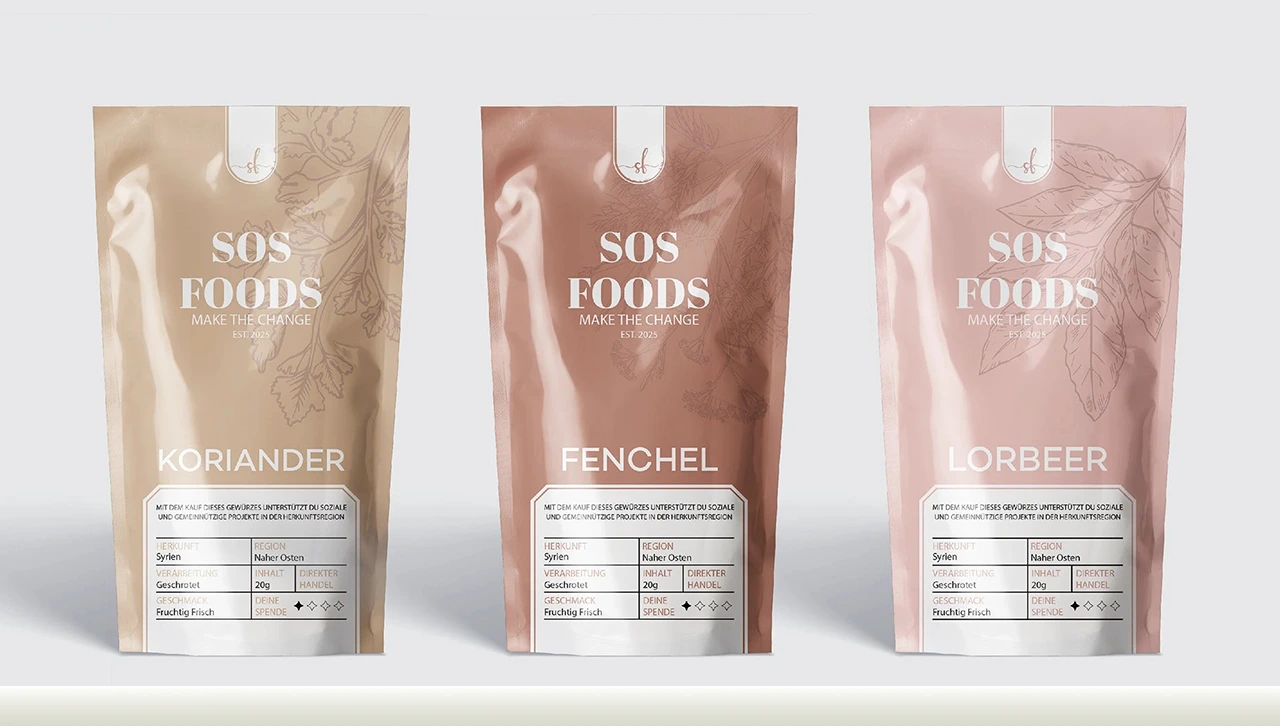
Packaging is not just about structure, materials, and colors. A good brand understands the importance and utilizes the existence of packaging labels, too. In fact, labels are something that elevates your packaging from good to great many times. And if you know all the nitty-gritty details of custom labels, you can make your packaging truly winning.
So, we hope you are clear about the purpose of this blog. It will dig into everything related to custom labels, their types, importance, and design variations for custom packaging.
What are Custom Labels?
Before we put you into intricate details, let’s first try to absorb superficial knowledge.
Custom labels are basically adhesive physical tags that are attached to the product packaging. They can be made of paper, plastic film, cloth, or related materials and printed with some brand-specific information, visual designs, or just delicate structures. The primary purpose of custom labels is to make the products distinguished from others of the same type, deliver a brand message, tell a unique story, or just deliver a key message to consumers.
Let’s understand it with an example. Suppose you have a cosmetic brand and you use standard packaging for your products. There are thousands of other beauty products in the market wrapped in standard boxes. So how will consumers know which products are from your brand? Custom labels serve this purpose but are not limited to this.
Types of Custom Labels
As the name indicates, custom labels can be customized into any shape, style, and pattern. That’s why packaging companies have created countless types and sub-types of these adhesive tags. Let’s discuss some of the most popular of those here.
-
Types With Respect to Label Format
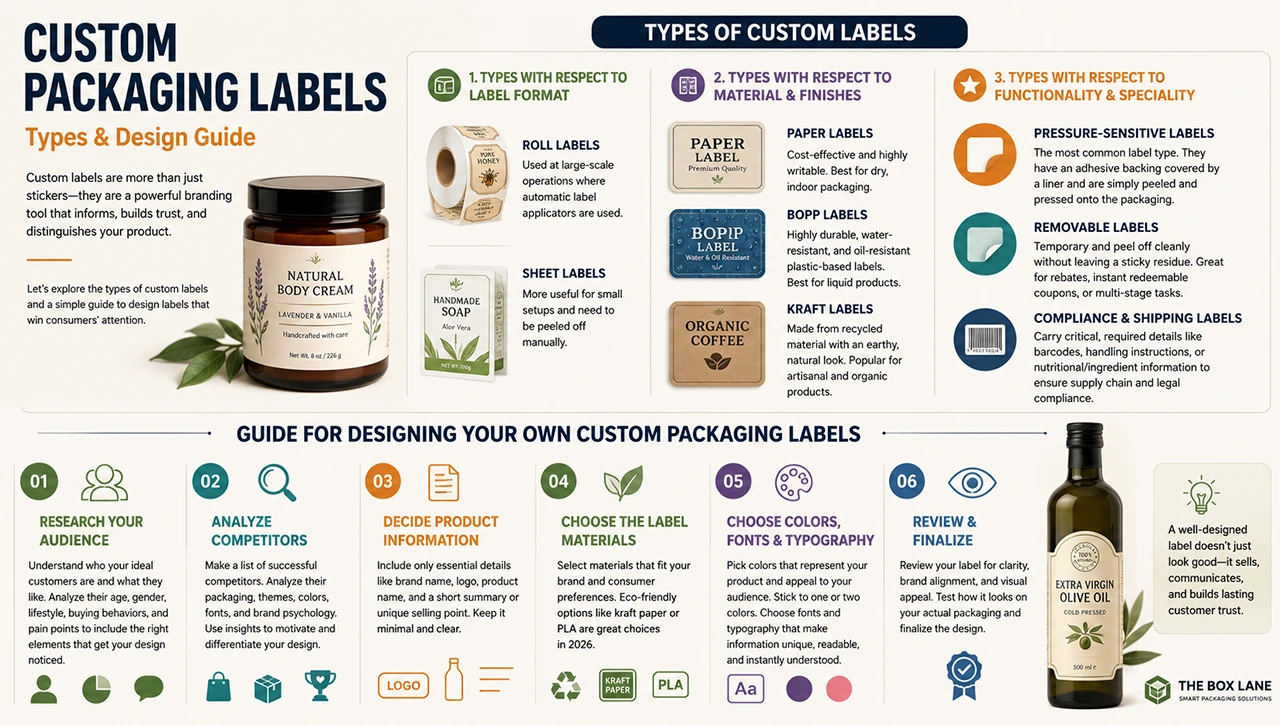
Custom labels are either roll labels or sheet labels. Roll labels are generally used at large-scale operations where automatic label applicators are used. Sheet labels are, however, more useful for small setups and need to be peeled off manually.
-
Types With Respect to Material and Finishes
The following are some types of custom packaging labels with respect to materials and finishes.
Paper Labels: These are cost-effective and highly writable. They are best for dry, indoor packaging.
BOPP Labels: These are highly durable, water-resistant, and oil-resistant plastic-based labels. They are best used for liquid products.
Kraft Labels: They are made from recycled material with an earthy, natural look. They are popular for artisanal and organic products.
-
Types With Respect to Functionality and Speciality
Custom labels can be of the following three types with respect to functionality and specialty.
Pressure-Sensitive Labels: This is the most common label type. They have an adhesive backing covered by a liner and are simply peeled and pressed onto the packaging.
Removable Labels: They are temporary and peel off cleanly without leaving a sticky residue. Great for rebates, instant redeemable coupons, or multi-stage tasks.
Compliance & Shipping Labels: They carry critical, required details like barcodes, handling instructions, or nutritional/ingredient information to ensure supply chain and legal compliance.
Guide for Designing Your Own Custom Packaging Labels
How do you design a custom label that wins consumers’ attention? Here is what we follow at The Box Lane.
-
Research Your Audience
The biggest asset for an e-commerce or consumer goods company is its audience. Before picking up a pencil and paper or thinking anything about design, spend some hours researching your audience. Understand who your ideal customers are and what they like the most. For example, the ideal audience for your cosmetic brand would be teenagers. Similarly, the most potential customers for your sports products would be athletes.
Once you find your audience, research everything about them. Understand their age, gender, lifestyle, buying behaviors, and pain points. Knowing these key features about your target audience would help you include the right elements that get your design noticed.
-
Analyze Competitors
Your competitors can be your biggest motivation. All you need to do is make a list of your successful competitors in the region where you sell your products. Find out which competitor products have been the most successful in the last few years. Analyze their packaging, understand their themes, colors, and typos, and try to understand the brand psychology as well.
-
Decide the Product Information to Include
Specify which product details you are going to keep in the design. We recommend choosing a minimalist design and only keeping the essential brand and product information. For example, it will include the brand name, brand logo, product name, and a summary of the product or just its unique selling point. This is the textual content. You have to reinforce it with visual elements so it does its job perfectly.
-
Choose the Label Materials
Choose which type of material fits your brand psychology and consumer preferences. Most consumers and companies are shifting towards eco-friendly packaging materials in 2026 due to increased awareness of green-planet initiatives. You can consider using kraft paper or PLA (polylactic acid) for this purpose.
-
Choose Colors, Fonts, and Typography
This is the stage where you put your heart into designing a visual identity for labels. First, choose colors that represent your product and align with consumer taste. We recommend you stick to one or two colors; don’t use multiple colors. Similarly, choose fonts and typography that present the information in a unique style so it is captured and understood instantly. Looking at competitors and successful packaging is a great way to get an idea of what your audience is truly interested in.
Set Your Brand Apart With The Box Lane
Ready to elevate your product unboxing experience with premium packaging labels? Let The Box Lane turn your ideas into reality. Ring us a bell today to discuss further.
FAQs
What is the difference between a label material and a finish?
Label material is the raw paper or plastic from which a label is produced. A label finish is the outer protective layer on the label, such as shiny gloss or smooth matte.
When should I choose vinyl labels over paper labels?
Choose vinyl labels over paper labels when your products are exposed to water, oil, or refrigeration.
What is the difference between roll labels and sheet labels?
Roll labels are for larger setups where a machine is used for application. Sheet labels are ideal for small batches and demand manual application.
What are the most common label design mistakes?
The most common label design mistakes we have witnessed at The Box Lane are using too small text, adding low-resolution visuals, and leaving white spaces at the edges.
What color mode should I use for custom label design?
We recommend designing custom packaging labels in CMYK color mode rather than RGB. This is because if you design them in RGB, they will look dull on physical products.