

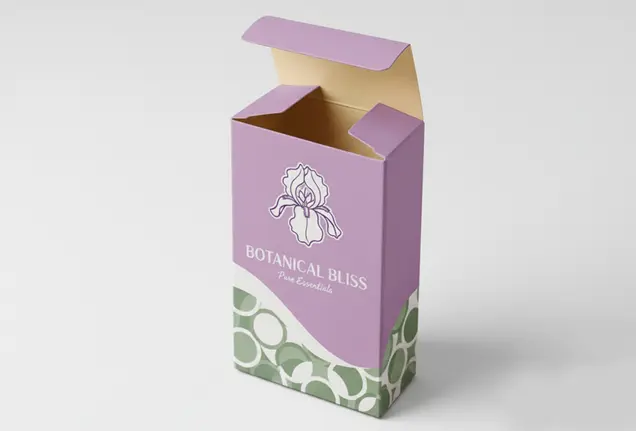
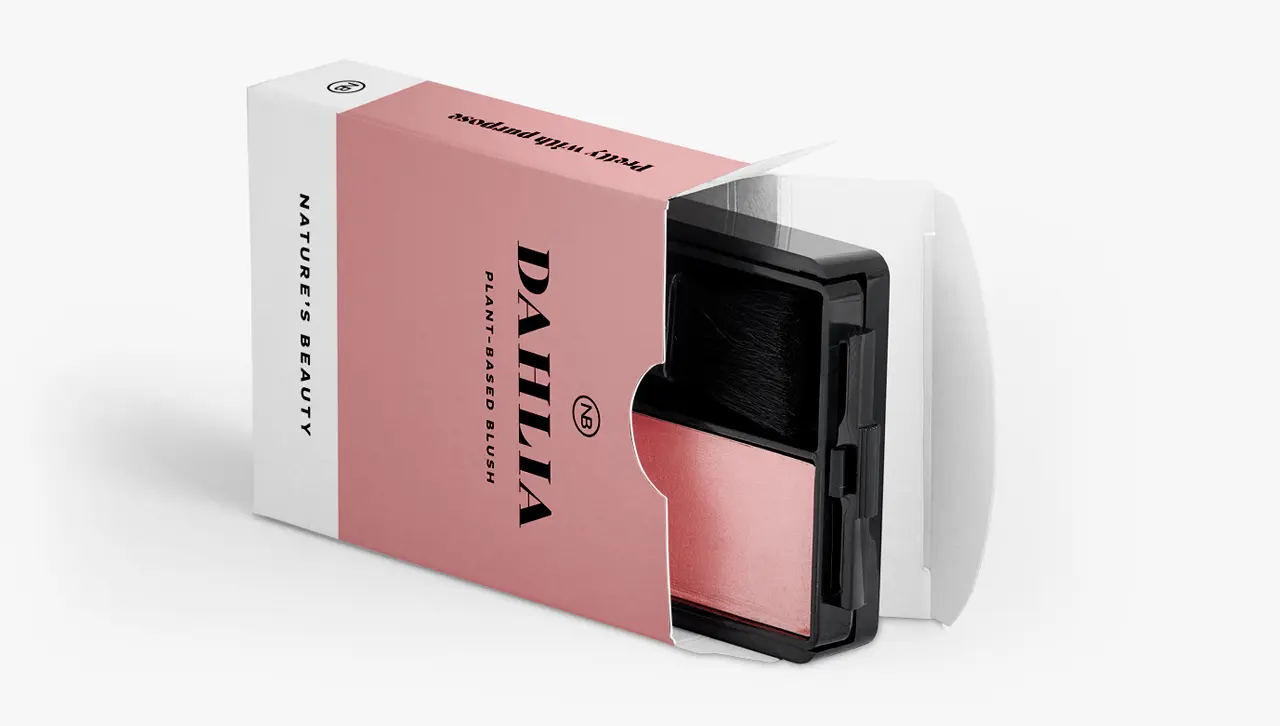
Have you ever seen boxes on retail store shelves that close without tape or glue? They are tuck boxes, one of the most popular packaging types for modern brands. Featuring a blend of strength, style, and customization, these boxes are a preferred choice for leading brands. Stats show tuck boxes represent roughly 36.2% of the folded carton packaging market. Could they be a great fit for your brand? Yes, they can be, but only if you choose the right box for the right product.
In this post, you will get a brief intro to tuck boxes, their types, benefits, and uses. If you need additional information, contact The Box Lane.
What Are Custom Tuck Boxes test?
Tuck boxes are a type of specialized custom packaging with wings and flaps that tuck into one another perfectly and close the package. They don’t need glue, tape, or ropes to close. The flaps lock themselves firmly, so there is little risk of accidental opening or product damage. Custom tuck boxes are customized to fit branding and promotional needs. For example, they are not blank; they feature a brand name, logos, taglines, or anything that helps the brand stand out from the competition.
Popular Types of Tuck Boxes
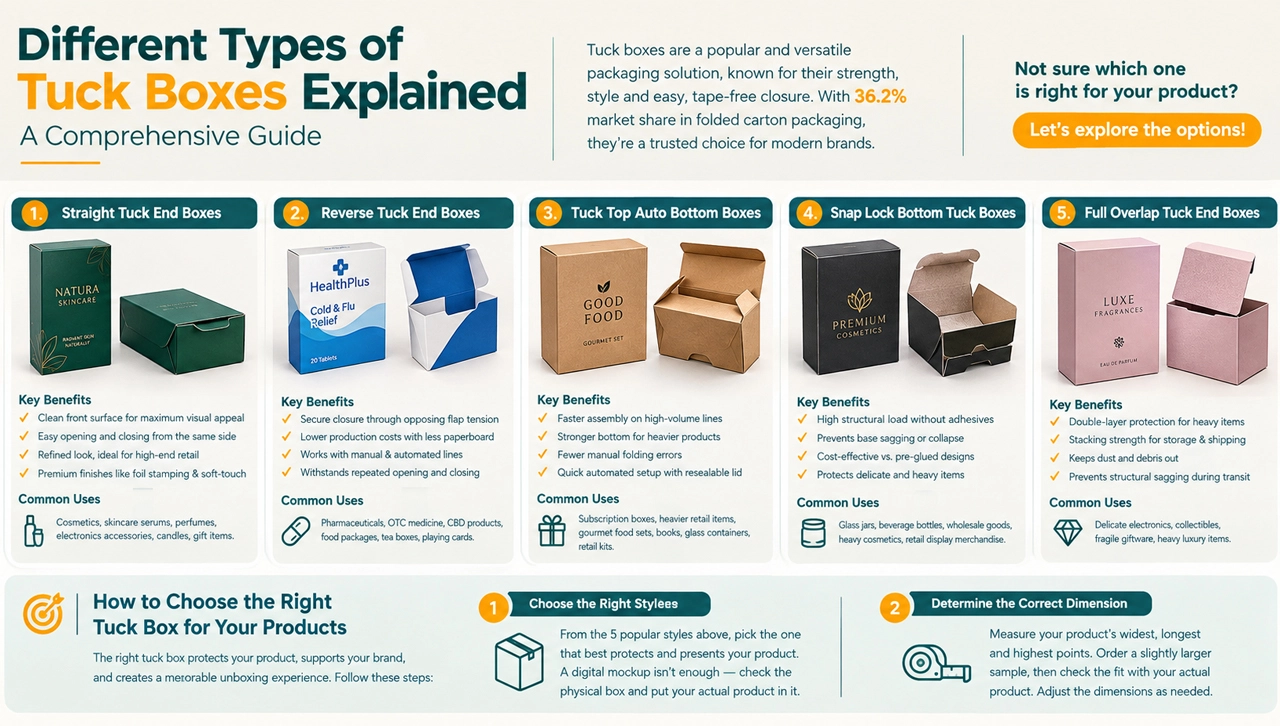
Tuck boxes can come in various styles and patterns to fit product needs. They differ by material, closing mechanism, and final appearance. The following are popular types along with benefits and common uses, so you can compare options.
These tuck boxes feature flaps at the top and bottom ends, leaving the front faces of the box smooth. Flaps at both ends close in the same pattern toward the rear panel of the box and close firmly. The smooth front faces remain unaltered for cleaning, branding, and visuals.
Key Benefits
- Clean front surface that maximizes visual shelf appeal
- Intuitive opening and closing from the same side of the box
- Refined presentation ideal for high-end retail packaging
- Premium finishes like foil stamping and soft-touch lamination
Common Uses
Cosmetics, skincare serums, perfumes, electronics accessories, retail candles, and gift items.
-
Reverse Tuck End Boxes
These tuck boxes feature top and bottom flaps that fold and tuck in opposite directions. The top flap tucks toward the back, while the bottom flap tucks toward the front. The tension between the two flaps provides structural resistance to prevent accidental opening.
Key Benefits
- More secure closure through opposing flap tension
- Paperboard usage to lower production costs
- Compatible with both manual assembly lines and automated machinery
- Withstands repeated opening and closing without losing structural integrity
Common Uses
Pharmaceuticals, over-the-counter medicine, CBD products, food packages, tea boxes, and playing cards.
-
Tuck Top Auto Bottom Boxes
These tuck boxes feature a tuck-in top flap with a pre-glued base. When the flattened box is in its final, three-dimensional form, the bottom panels automatically snap and lock without manual folding.
Key Benefits
- Reduced assembly time on high-volume packing lines
- Superior bottom strength for supporting heavier products
- Manual base-folding errors during product fulfillment
- Rapid automated setup with a simple resealable top lid
Common Uses
Subscription boxes, heavier retail items, gourmet food sets, books, glass containers, and retail kits.
-
Snap Lock Bottom Tuck Boxes
These tuck boxes feature a top tuck flap. The bottom relies on four flaps that interlock firmly together and create a base that can handle the weight. However, flaps in these boxes require manual folding, unlike the previous versions.
Key Benefits
- High structural load without needing factory adhesives
- Base sagging or collapse when items are piled up
- A cost-effective alternative to pre-glued auto-bottom designs
- Protects delicate and heavy items during handling
Common Uses
Glass jars, beverage bottles, wholesale goods, heavy cosmetics, and retail display merchandise.
-
Full Overlap Tuck End Boxes
These boxes feature top and bottom panels that fold over the entire length of the box instead of meeting midway. This complete overlap creates a double-layer barrier on both panels, ensuring protection for heavy items.
Key Benefits
- Double-layer board protection for heavy items
- Stacking strength for storage and multi-unit shipping
- Keeps dust and debris out with tighter panel overlaps
- Protects valuable contents from structural sagging during transit
Common Uses
Delicate electronics, high-end collectibles, fragile giftware, and heavy luxury items.
How to Choose the Right Tuck Box for Your Products
Choosing the right tuck boxes is essential for protection, branding, and a premium unboxing experience. Follow the following steps from The Box Lane to choose the right fit.
Choose the Right Style
You discovered 5 popular tuck box styles in the above sections. Choose the one that best protects and presents your products to consumers. A digital mockup is not enough; check the physical box and put your actual product in it.
Determine the Correct Dimension
Measure the product's dimensions at its widest, longest, and highest points. Then order the slightly larger sample. Once you get the sample, place your actual product and check whether the box is the right size. Adjust the dimensions based on physical examination.
Select the Right Material
Tuck boxes come in various materials. Kraft paper, cardstock, and corrugated cardboard are the popular options available. Choose the material that best fits your products, brand vision, and consumer’s taste. You can also choose finishing options of your choice for a more premium feel.
Choose the Right Supplier
This is above everything else. A good supplier knows everything you don’t know. He doesn’t let you guess; he presents real-world data on product compatibility, protection, consumer behavior, and branding compatibility. If you choose a professional supplier, such as The Box Lane, you can rest assured, knowing you will get your premium products produced right according to your vision.
Contact The Box Lane if you are looking for custom tuck boxes.
FAQs
What is a tuck box?
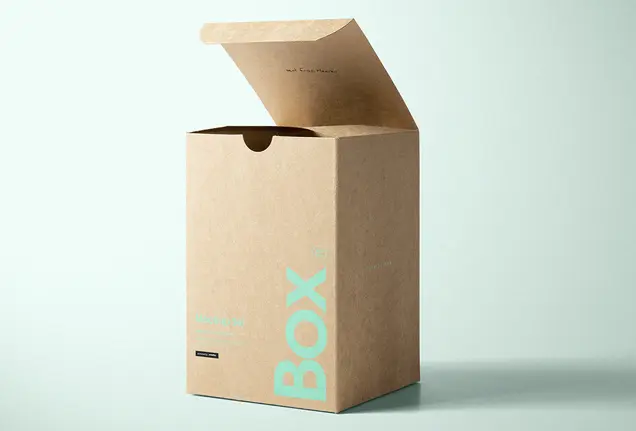
A tuck box is a lightweight, foldable paperboard carton. It features top or bottom flaps that tuck into the main body and close the box firmly to protect products inside.
What is the difference between a straight tuck and a reverse tuck box?
On a straight tuck box, both the top and bottom closure flaps fold toward the same side. On a reverse tuck box, the flaps fold in opposite directions.
Which tuck box is best for heavy items?
An auto-bottom or snap-lock tuck box is ideal for heavy items. Its interlocking bottom panels prevent the product from falling through.
What are material options for tuck boxes?
You can choose from cardstock, kraft paper, or corrugated cardboard for manufacturing tuck boxes of your choice.
Are tuck boxes eco-friendly?
Yes, most tuck boxes are eco-friendly, as they are made from recyclable or biodegradable materials.