


Most packaging companies sell standard packaging. Same sizes, same shapes, and similar designs. What happens when you buy them? If your products are standard, it might do the job. But what if your products are of irregular sizes, sensitive to certain environmental components, or just serving a specific purpose that is not what usual products do? In this case, standard packaging falls short. You need a vendor who understands your industry, your products, your target audience, and consumer behavior. Only after complete understanding can a company produce packaging that truly performs.
That's why choosing the right vendor is essential. In this guide, we will explore how you can choose the right vendors, which questions to ask, and how to claim the best offer.
Why Every Packaging Vendor Is Not the Right Choice
Every packaging vendor is not your ideal supplier, as not everyone understands your products. And without a complete understanding of products, no one can make great packaging. The other main challenge is the use of AI for packaging design and structure. When you place an order, the company just gives your products to AI tools and asks them to make a beautiful packaging design for them. The AI no doubt creates stunning designs with innovation, but those designs often fail when presented to the real audience.
Here are some reasons why every vendor is not the right fit for your products.
Limited Experience
Most companies have experience limited to the food, beverage, and cosmetic industries. Some more experienced ones might have exposure to a few more niche areas such as healthcare, electronics, and chemicals. If you sell agricultural products, insecticides, or liquids, most companies fail to design perfect, functional, and branded packaging.
Hidden Costs
This could again be aligned with experience and knowledge. Most vendors accept orders for entirely new products and give a quote based on their previous experience. But if your packaging needs additional layers for product safety, vendors start demanding additional costs. It causes delays, frustration, and an unexpected cost burden.
Compromise On Quality
Most vendors are not familiar with the quality control criteria and regulatory requirements for new products. They test the packaging according to standard protocols and find it useful. But when you start selling your products, customers complain about safety, tactile experience, reusability, or eco-friendliness. In many cases, packaging also fails at regulatory compliance.
How to Choose the Right Vendor for Custom Packaging
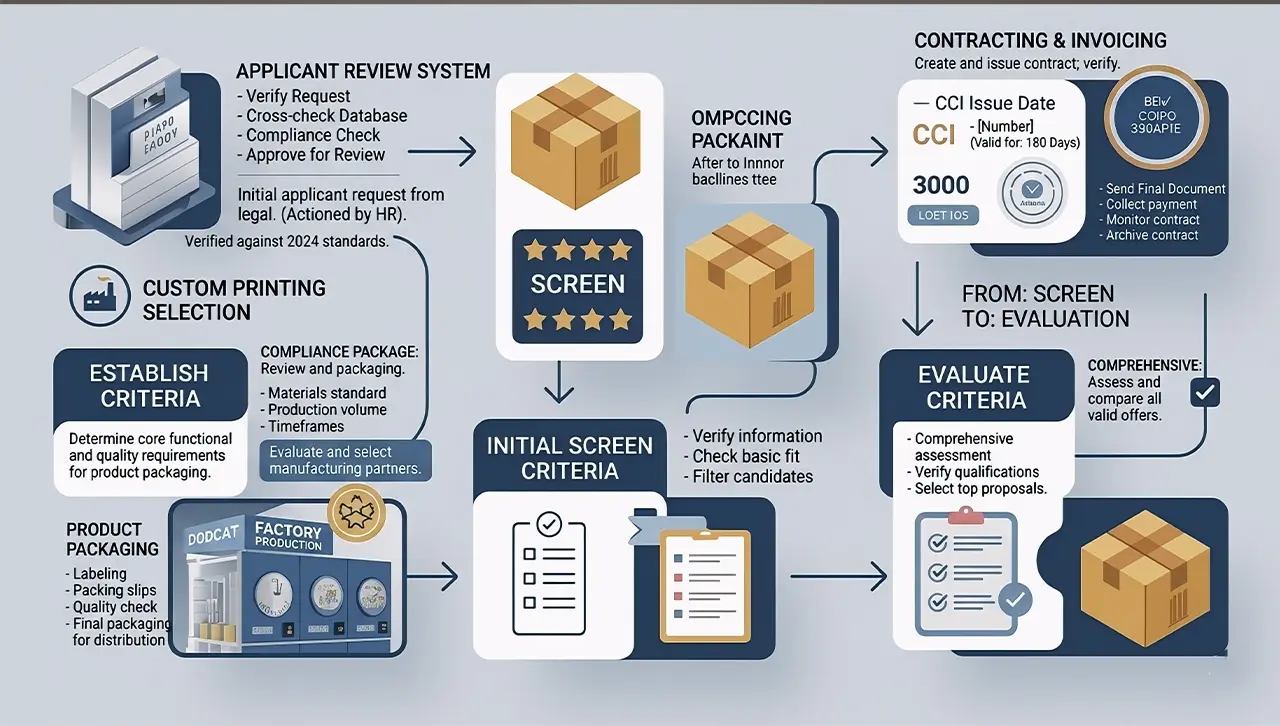
We clearly know that not all vendors are equal, and not all are a good choice for your products. Now, let's build a step-by-step process to evaluate every vendor against specific criteria. It will help you understand which one is the right choice for your products.
-
Establish Your Core Criteria
Before talking to even a single vendor, establish your non-negotiables. This is the first stage, and you have to do the work yourself. It will be beneficial, as you will filter out the vendors. Here is how to establish that criterion.
- Decide on your ideal packaging thickness standards, puncture resistance, and barrier properties.
- Establish your regulatory compliance protocol, e.g., FDA-grade materials, child resistance, and ISO certifications.
- Decide your order quantity, ideal lead time, and scalability.
- Choose your ideal printing, finishing options, and design technicalities.
-
Initial Screen
When you find a potential vendor, start with a 10-minute initial screen test first. It involves the following steps.
Reviews
Check out the reviews on the vendor's public profiles. Evaluate whether the previous clients are satisfied with the services. See clearly what customers admire most and what they complain about most. After analyzing the rating and reviews, you will likely know whether that specific vendor is trustworthy.
Case Studies
Check out what they have featured on their profiles. Do the featured case studies involve similar products you have? Check out whether the packaging designs, thickness, materials, and shapes align with your taste.
Transparency
Check whether they have mentioned the transparency signals, such as certifications, licenses, and permits. You can check ISO, FDA, and FSC certifications depending on your products and the industry.
Equipment
Check whether they have in-house manufacturing equipment or if they are just brokers. Vendors who own a manufacturing setup are more likely to be affordable and have fast lead times.
-
Evaluate Against Your Criteria
Once you have a specific vendor in mind, evaluate them against your criteria. You can use the following checklist for evaluation. Establishing a scale from 0 to 5 or 0 to 10 and scoring each vendor against it is another good practice to compare all of them.
Material Match: Check whether they provide the material you need. For example, if you need Mylar bags, check if the company produces BoPET structures with an aluminum layer.
Packaging Samples: Ask if they provide physical samples of their previous work.
Personalized Closures: Ask if they can integrate specialized closures such as child-resistant zippers, magnetic closures, etc.
Lead Time: Check whether their timeline aligns with your requirements. Opt for the vendor who can deliver it before your deadline.
-
Stress Test Interview
Contact the vendor and ask them some questions about how they ensure the quality of their packaging. A uniformity confirmation is also a necessary step at this stage. Ask these questions to confirm how they handle the complexities.
How do you manage a batch if it fails for quality?
Check if the vendor has a well-defined quality assurance program. Also, check if they have clear replacement, return, and refund policies.
How do you ensure color consistency?
Look at which specific technologies they use so the color remains the same as what they showed in the makeup. Additionally, ask how they maintain the color consistency during various batches of the same product packaging.
Do you possess a General Certificate of Conformity (GCC) for your materials?
Check their documents and certifications. Evaluate if their packaging truly qualifies for the criteria of U.S. consumer product safety rules.
-
Final Decision
Compare the answers of multiple vendors. If you have used a score scale, then look at the table. Check which vendors are more trustworthy and align with your packaging needs. After a careful assessment of all the available options, choose the one that is affordable, professional, and reliable. You can also order a few samples first before placing the order. If the samples satisfy you, you can confidently move ahead to place the actual order.
Summary
Choosing the right custom packaging vendor is not just about finalizing the deal at the lowest price. It is about obtaining the best quality at a reasonable cost. Remember, a vendor who charges less and makes vaguer claims and promises is not the best choice at all. You have to pick the one who gives logical answers to your concerns, is certified by the regulatory authorities, and truly understands your industry and products.
If you are looking for a vendor who meets all those requirements, The Box Lane is the right choice. Get a free quote or contact us at 484-224-2666.
FAQs
How long does custom packaging take from order to delivery?
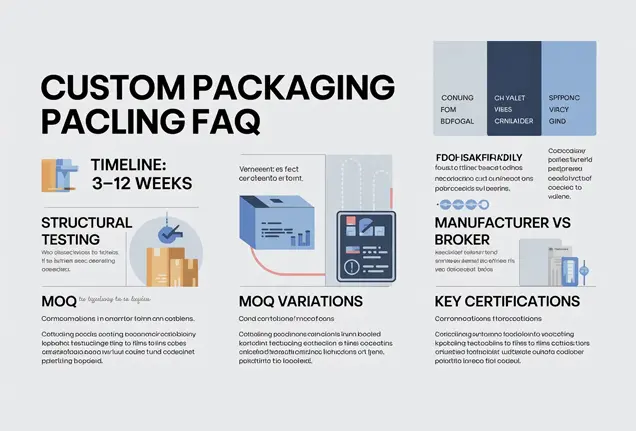
Custom packaging takes approximately 3 to 12 weeks from initial quote to final delivery. It involves multiple steps in between, including design, approval, manufacturing, printing, finishing, and shipment.
How do I know if packaging is structurally stable?
To know if the packaging is structurally stable, perform manual checks, various tests, and material inspections. Check the parameters such as material thickness, design reinforcements, and secure seals. Additionally, check the company's license and certifications for material stability.
What is the difference between a packaging manufacturer and a broker?
A manufacturer has its own machine, prepares packaging on its own, and ensures full technical support. On the other hand, a broker is a middleman between the customer and the manufacturing company. He gets the packaging prepared from the company according to customer preferences, gets money from the customer, and earns his commission.
What are MOQs and why do they vary so much?
MOQ stands for Minimum Order Quantity. It is the lowest number of packaging units a vendor can produce per order for a client. They vary from company to company due to equipment capacities, printing techniques, and other technicalities. For example, digital printing has a lower MOQ than gravure printing because it doesn't need to set physical plates.
What certifications should I look for from my packaging vendor?
Ask for the certifications of regulatory authorities in your industry. As a priority, you can ask them for FDA, FSC, and SPSC certifications.