

You see Red Bull drinks in cans. Apple accessories come in cardboard boxes. Jams and jellies do best in glass jars. Is this choice anonymous? Not at all. The packaging material choice depends on the product type, aroma, shelf life, ingredients, and vulnerability to mechanical damage. And this choice is not just limited to product safety. It also affects how consumers perceive your brand and how confidently they make a purchase.
But how do I know which packaging material is best for my goods? This exact question lands in our inbox almost every day. The answer is pretty straightforward. The best packaging material for your goods is the one that ensures product safety, a premium feel, and fits the consumer's taste. It can be anything, from plastic to paper, cardboard, aluminum, glass, or Mylar. Modern consumers are increasingly attracted to eco-friendly packaging materials with increased awareness of environmental friendliness and sustainability. That’s why choosing eco-friendly materials helps you grab those planet-caring customers and also helps you meet regulatory requirements more comfortably.
Back to the topic, this blog covers the process of choosing the right packaging material for products. Let’s uncover it step by step.
-
Consider Your Product
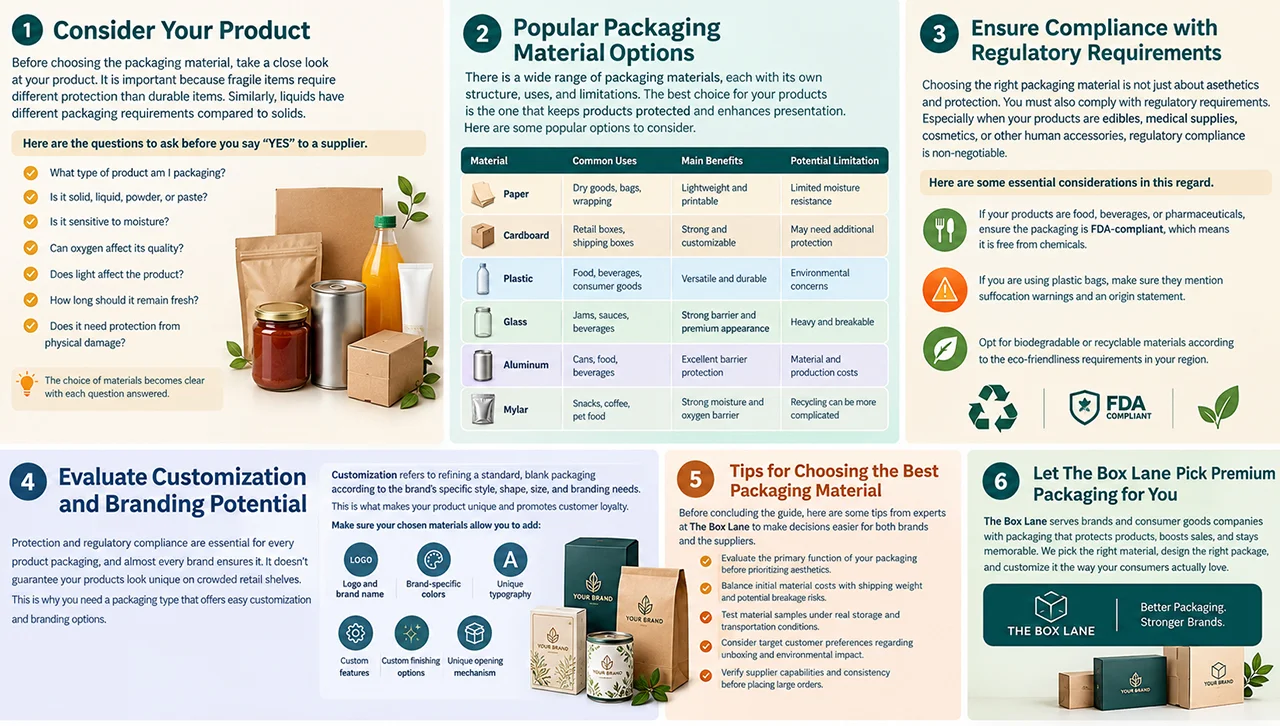
Before choosing the packaging material, take a close look at your product. It is important because fragile items require different protection than durable items. Similarly, liquids have different packaging requirements compared to solids. Here are the questions to ask before you say "YES" to a supplier.
-
What type of product am I packaging?
-
Is it solid, liquid, powder, or paste?
-
Is it sensitive to moisture?
-
Can oxygen affect its quality?
-
Does light affect the product?
-
How long should it remain fresh?
-
Does it need protection from physical damage?
The choice of materials becomes clear with each question answered.
Popular Packaging Material Options
There is a wide range of packaging materials, each with its own structure, uses, and limitations. The best choice for your products is the one that keeps products protected and enhances presentation.
Here are some popular options to consider.
|
Material |
Common Uses |
Main Benefits |
Potential Limitation |
|
Paper |
Dry goods, bags, wrapping |
Lightweight and printable |
Limited moisture resistance |
|
Cardboard |
Retail boxes, shipping boxes |
Strong and customizable |
May need additional protection |
|
Plastic |
Food, beverages, consumer goods |
Versatile and durable |
Environmental concerns |
|
Glass |
Jams, sauces, beverages |
Strong barrier and premium appearance |
Heavy and breakable |
|
Aluminum |
Cans, food, beverages |
Excellent barrier protection |
Material and production costs |
|
Mylar |
Snacks, coffee, pet food |
Strong moisture and oxygen barrier |
Recycling can be more complicated |
Ensure Compliance with Regulatory Requirements
Choosing the right packaging material is not just about aesthetics and protection. You must also comply with regulatory requirements. Especially when your products are edibles, medical supplies, cosmetics, or other human accessories, regulatory compliance becomes non-negotiable. Many organizations across the globe now operate to make packaging according to standards of eco-friendliness, product safety, and prevention of side effects.
Here are some essential considerations in this regard.
-
If your products are food, beverages, or pharmaceuticals, ensure the packaging is FDA-compliant, which means it is free from chemicals
-
If you are using plastic bags, make sure they mention suffocation warnings and an origin statement
-
Opt for biodegradable or recyclable materials according to the eco-friendliness requirements in your region
Evaluate Customization and Branding Potential
Protection and regulatory compliance are essential for every product packaging, and almost every brand ensures it. It doesn’t guarantee your products look unique on crowded retail shelves. This is why you need a packaging type that offers easy customization and branding options. Customization refers to refining a standard, blank packaging according to the brand’s specific style, shape, size, and branding needs. This is what makes your product unique and promotes customer loyalty. While choosing the right materials for your products, make sure you choose materials that allow you to refine a standard bag, box, or bottle into a unique style, pattern, and colors that are specific to your brand. Once you choose such materials, customize them by adding
-
Logo and brand name
-
Brand-specific colors
-
Unique typography
-
Illustrations and elements
-
Custom features
-
Custom finishing options
-
Unique opening mechanism
Not all of them are essential. You can opt only for those which makes the most sense for your products and leave those that are not essential.
Tips for Choosing the Best Packaging Material
Before concluding the guide, here are some tips from experts at The Box Lane to make decisions easier for both brands and the suppliers.
-
Evaluate the primary function of your packaging before prioritizing aesthetics
-
Balance initial material costs with shipping weight and potential breakage risks
-
Test material samples under real storage and transportation conditions
-
Consider target customer preferences regarding unboxing and environmental impact
-
Verify supplier capabilities and consistency before placing large orders
Let The Box Lane Pick Premium Packaging for You
The Box Lane serves brands and consumer goods companies with packaging that protects products, boosts sales, and stays memorable. We pick the right material, design the right package, and customize it the way your consumers actually love. If you are looking for luxury, durable, and shelf-ready packaging for your brand, feel free to discuss details.
FAQs
What is the most eco-friendly packaging material?
Paper and cardboard are among the most eco-friendly packaging options available.
How do I choose the best packaging for food products?
Select FDA-compliant materials like glass or Mylar that preserve freshness and protect against moisture and oxygen.
Why is custom packaging important for my brand?
Custom packaging helps your products stand out on retail shelves and enhances brand recognition and customer loyalty.
What material provides the best barrier protection against moisture and light?
Mylar and aluminum offer superior barrier properties against light, air, and moisture for long shelf-life items.
How can I reduce shipping costs through packaging choices?
Opt for lightweight materials like paper or flexible plastics to minimize dimensional weight and shipping fees.