

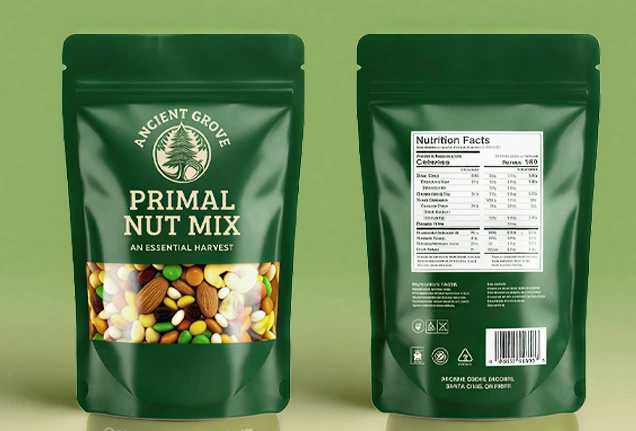
The packaging trends are continuously evolving. From the wood boxes and leather bags to modern plastic, aluminum, and cardboard packaging, the world has covered a long journey. When it comes to food packaging, you need something extraordinarily protective and easy to handle. Mylar bags are so far the most premium option for storing food. You might have used these shiny storage pieces before. In this blog, we will educate you practically on how you can store your food products effectively in Mylar bags.

What are Mylar Bags for Food Storage?
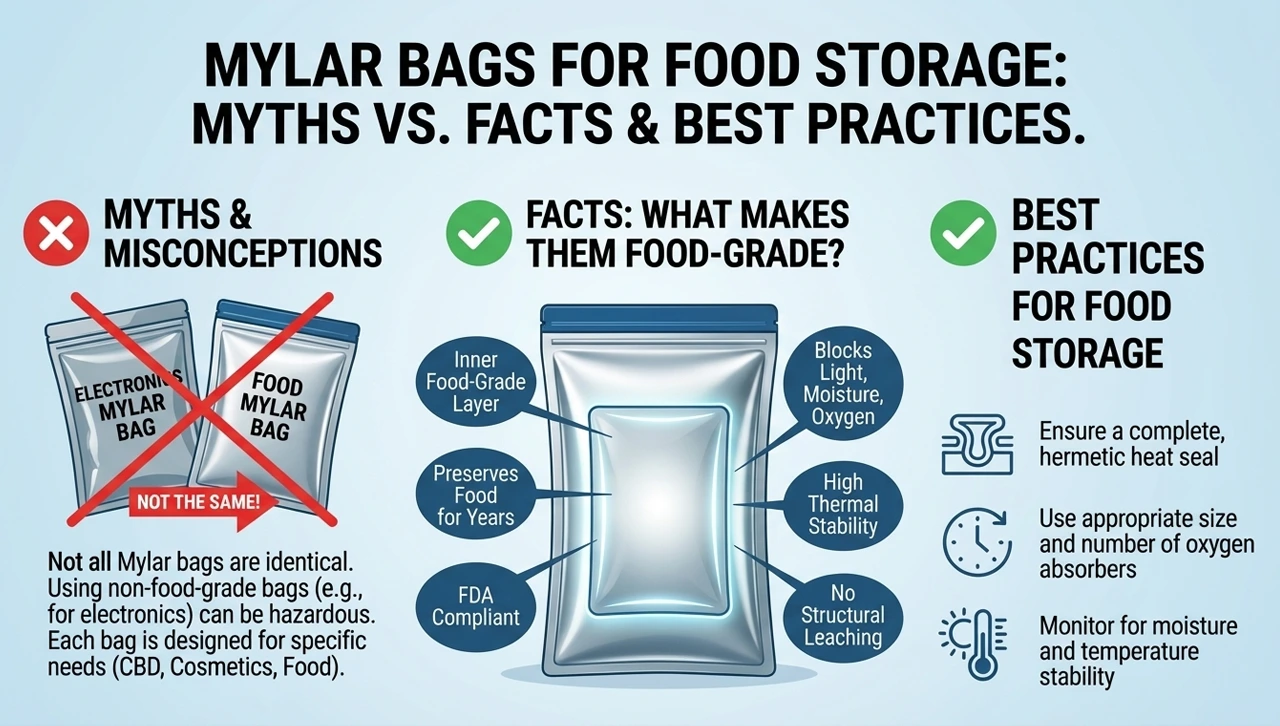
Before diving deep into storing techniques, we would like to clarify a common misconception. Many users think that all Mylar bags are the same. Some of them even think about using Mylar bags made for electronics to store their edibles. This is not just a bad practice; it can also lead to severe health hazards.
The fact is that all Mylar bags are the same only in their basic framework, composition, and structure. They are not totally identical and do not have the same uses. It means the bag for CBD products is not good for cosmetics or dry fruits. There is always a difference in Mylar according to the needs of the industry and the nature of the products to be stored.
Are you clear now? Let’s now see what Mylar bags are for food storage.
A Mylar bag for food storage is one that has an inner layer of food-grade materials and complies with regulatory requirements of the food industry. It should:
- Preserve food products for years.
- Block light, moisture, and oxygen.
- Comply with FDA regulations.
- Ensure high thermal stability.
- Do not leach structural ingredients inside.
Best Practices for Food Storage in Mylar Bags
To keep this guide practical and to-the-point, we are not going to take you through the Mylar options available, sizes, thicknesses, or how to choose the right bag. However, if you want to explore those guides, you can just explore our other informationalblogs.
Let’s come to the main topic: storing food properly in Mylar bags.
Choose Clean Zone to Fill the Bag
You got a Mylar bag and food items. It could be beans, grains, pasta, or whatever you want to store. Now, you have to choose the right place to fill your pouches. We recommend choosing a secluded, comfortable place with no direct human, pet, or environmental disturbance. The ideal place should have:
- No direct contact with humidity, moisture, or light.
- A smooth and clean surface, such as a kitchen table.
- Easy access to a heat sealer and oxygen absorbers.
- Minimal chance of disruption by pets and birds.
Pro Tip: Make sure the items you are storing are completely dry with minimal moisture or fat levels.
Leave at Least 2-4 Inches at the Top
Many consumers make mistakes. They just fill the bag to all its available space. Doing so means you are compromising the physical stability of the bag. If you fill the bag to its top, it will put pressure on the seal. With continuous stress, the seal may break, or the bag itself may rupture. The result is a pathway for gases and vapors that will spoil your food in just a few days.
We recommend leaving at least some inches at the top. It will help you in easy sealing and storage. Furthermore, there are increased chances that the seal will remain intact.
Use Oxygen Absorbers
Mylar bags are effective for food preservation due to their unique, layered structure and an aluminum layer in between. This structure is definitely strong enough to prevent outside oxygen at a distance. But what if some oxygen remains in the pouch while filling? This is where we need oxygen absorbers.
Oxygen absorbers are tiny packets of iron powder. They benefit by utilizing any residual oxygen in the pouch, leaving no oxygen to start the oxidation process. You may consider these packets as an extra layer of protection.
Here is our recommendation for using oxygen absorbers:
Up to 1 quart: 100 cc
1 Gallon Bag: cc
5 Gallon Bag: 3,000cc
Create a Perfect Seal
The most important thing after the structure of the bag is its seal. There are so many options for creating a seal. For convenience, you may use household appliances such as a hair straightener or a clothing iron. This is a good practice for short-term storage only. At The Box Lane, we don’t encourage these kinds of practices if you expect your food to stay fresh for years or perhaps decades.
We recommend a proper sealing appliance, such as an impulse heat sealer or a chamber vacuum sealer, if you aim for long-term food storage. Press the sealer for at least 2-3 seconds at a temperature around 375℉ to 425℉. It ensures a perfect, sturdy seal creation.
Pro Tip: Subject the bag to a vacuum sealer before creating a seal. This method ensures all the possible air is evacuated from the bag. Additionally, create two parallel seals for extra protection.
Store in a Cool, Dry Place
Done with creating a seal? Good, your food is now protected. You have almost done it. Here is the last step to keep your food protected, not only from environmental factors but also from physical damage. Place the pouches in a strong container such as a bucket with a lid. Make sure the container is strong enough to prevent any accidental access by rodents and pets. After this, place the entire container with the bags inside in a cool, dry, and dark place. The purpose is to prevent any exposure to moisture, oxygen, and light—the three primary culprits of degradation.
Done with this? Congratulations, you have now stored your food for years or perhaps for decades.
Pro Tip: Label the pouches accurately with product information. It may include the type of food inside, the amount, the purpose, the expiry date, etc. It will help you identify what you have stored in a particular bucket.
Order Your Food-Grade Mylar Bags Today!
Ready to buy Mylar bags for food products? Explore premium options atThe Box Lane. We can also customize the bags according to your choice with no die and plate charges.
FAQs
What kind of food can I store in Mylar bags?
You can store a variety of foods in Mylar bags, including rice, beans, pasta, lentils, and more. Make sure the food is completely dry and has no fat content.
Why do I need oxygen absorbers?
You need oxygen absorbers to prevent degradation risks. A small amount of trapped oxygen remains in the bag even after the air is removed. Oxygen absorbers utilize this oxygen, thereby preventing any risk of degradation and spoilage.
How would I know if the seal is airtight?
You should not look for a bag to look vacuum-sucked to confirm the tightness of the seal. You can confirm the seal integrity by gently squeezing the bag. If there is no sign of air escape, the seal is good to go.
What is the best tool to seal the bag?
For a perfect, airtight seal, you should prefer to use an impulse heat sealer. It creates a consistent and wide seal that keeps the ingredients preserved.
How much space should I leave at the top?
Leaving 2 to 3 inches is generally a good practice. It ensures there is no strain on the pouch and the seal.