

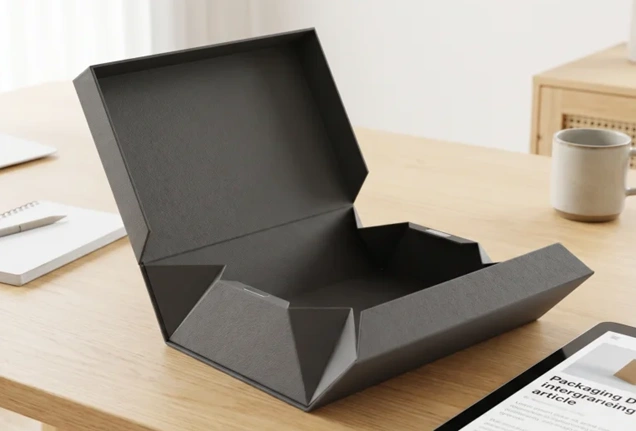
Choosing the right packaging type is a must-have for modern businesses. It protects goods, increases perceived value, and enhances the unboxing experience. When comparing modern, luxury packaging options, three structures lead the market: magnetic, foldable, and rigid gift boxes. While all are premium packaging options, their manufacturing process, material, style, and shipment cost differ significantly. This blog covers a direct comparison to help you choose the right option for your brand.
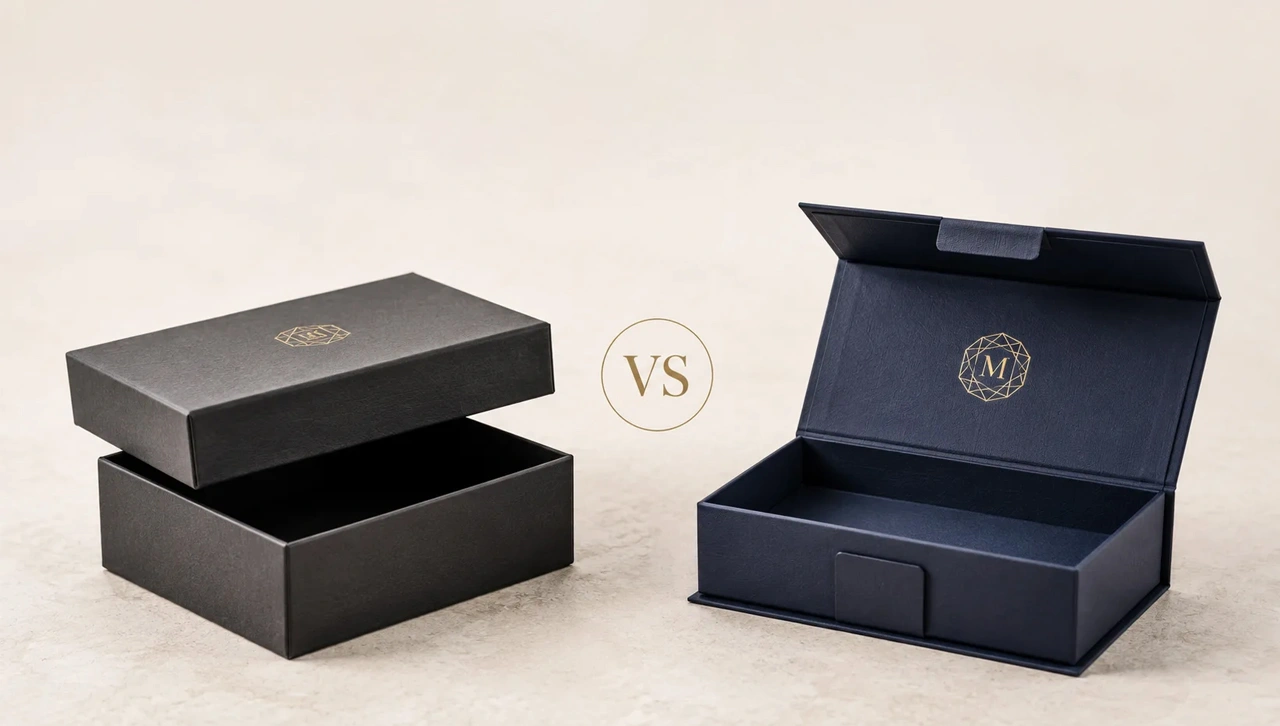
Quick Comparison At a Glance
|
Packaging |
Freight Cost |
Warehouse Footprint |
Assembly Time |
Top Strength |
|
Rigid |
Very High |
Maximum |
0 sec (pre-built) |
Highest structural frame |
|
Magnetic |
High |
Maximum |
0 sec (pre-built) |
Premium snap-close experience |
|
Foldable |
Lowest |
Minimal (ships flat) |
3–5 sec (peel & pop) |
Massive storage savings |
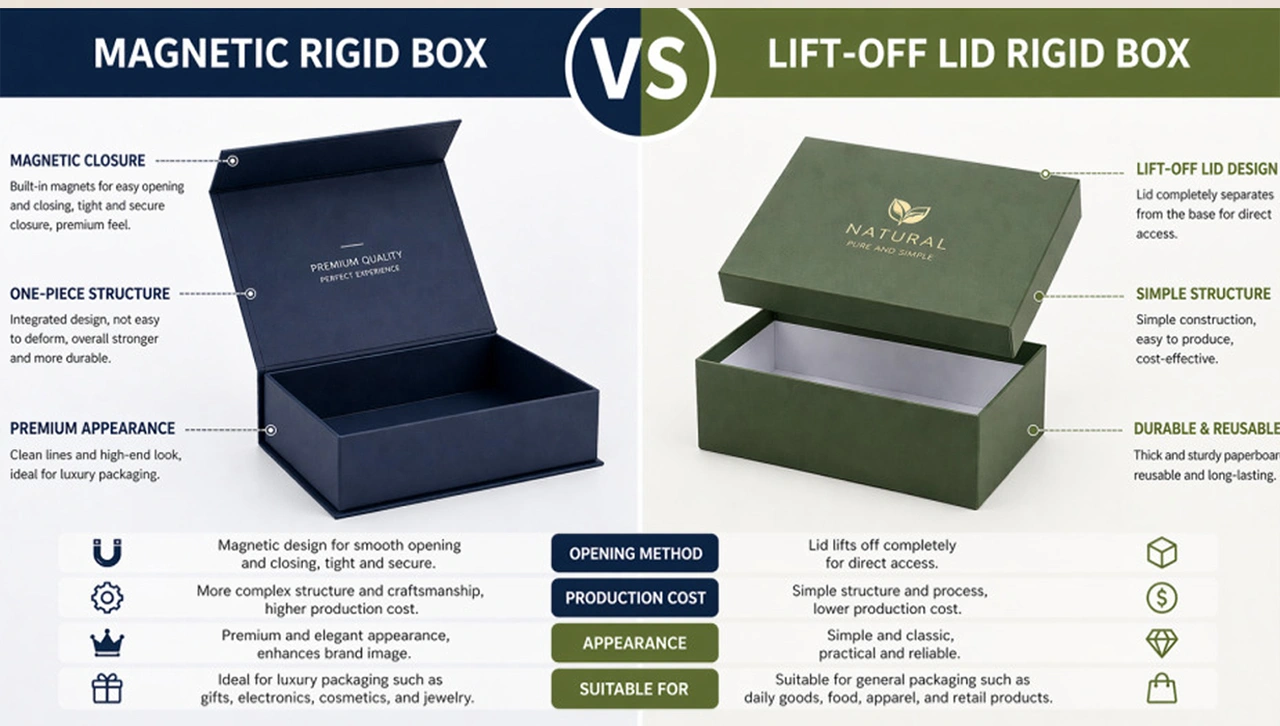
Analyzing Each Packaging Style
Each packaging differs from others. Traditional rigid boxes have the highest structural strength, while magnetic boxes are popular for their unboxing experience. Foldable boxes, on the other hand, take up the least space and cost less for space savings. Find the detailed comparison in the sections below.
Traditional rigid boxes are also known as set-up boxes. They consist of a very high-density, premium chipboard wrapped in paper or foil. Unlike foldable packaging, rigid boxes are shipped in their final 3D shape. Here are further details.
Structure
A solid, non-folding heavy chipboard core is wrapped in paper with a separate lift-off lid.
How It Ships
They are shipped in their original three-dimensional form. That’s why they cost more to ship, as they take up more space compared to foldable versions.
Best Use
They are best used in ultra-luxury retail, jewelry, and flagship products where a premium unboxing experience matters along with extraordinary product protection.
Pros
Their advantages encompass maximum structural durability, zero assembly required, and a classic, vertical-lift unboxing feel.
Cons
The drawbacks include high storage costs and a warehouse footprint for shipping empty air inside the boxes.
As the name indicates, they feature a magnet inside the lid. The snap-shut feature elevates the unboxing experience and is one of the reasons for their popularity. Find further details below.
Structure
These are rigid board boxes featuring an integrated hinged lid with hidden neodymium magnets.
How It Ships
They can be shipped either pre-assembled or as collapsible packs. This makes them shipping-friendly compared to traditional rigid boxes and reduces shipping costs.
Best Use
This is for premium retail products, cosmetics, and corporate gifts that require a smooth book-style opening.
Pros
The best advantage is a snap-shut closure. Brands also love them because they are reusable and collapsible, saving up to 60% on freight costs.
Cons
They cost more than standard two-piece setups.
-
Foldable Rigid Boxes
Foldable rigid boxes bridge the gap between flat-pack shipping efficiency and premium, rigid structure. They use standard chipboard panels but ship entirely flat and turn into a steady, three-dimensional box in seconds.
Here are some noticeable features of this packaging type.
Structure
They have heavy greyboard panels that fold into shape, often secured with corner adhesive tape or snap-locks.
How It Ships
They ship completely flat and minimize the dimensional weight. Being lightweight and foldable, they cost less to ship.
Best Use
They are best used for e-commerce shipping, high-volume imports, and brands with limited warehouse space.
Pros
They offer massive savings on storage space and lower shipping fees. They usually take 80% less room than standard rigid boxes.
Cons
Every box requires 5 to 10 seconds of manual setup. They also handle less extreme stacking weight than solid, non-folding setups.
Tips for Choosing the Right Packaging
Choosing the right packaging balances material and style with the shipment and storage costs. Customization options, premium feel, product safety, and unboxing experience are equally important.
Here is when choosing each of the aforementioned packaging options makes the most sense.
Choose Traditional Rigid Boxes If:
- You have unlimited storage and shipping budget
- You have ultra-fragile goods that need maximum protection
- You prefer instant packaging that requires zero assembly
- You prioritize classic slow-release lid fits
Choose Magnetic Closure Boxes If:
- Interactive snap-shut unboxing is a priority
- You love reusable keepsake design, which adds value
- You need a sleek side opening that enhances product display
- You need a balance between premium luxury and collapsible shipping
Choose Foldable Rigid Boxes If:
- Warehouse storage space is limited
- Lower shipping costs are essential
- A rigid look is preferred that fits lower budgets
- Quick assembly fits your packing workflows
Conclusion
Advancements in the packaging industry have given brands so many options. They can choose standard, rigid boxes for superior protection. They can choose magnetic boxes for a memorable unboxing experience. They can use foldable versions for low shipping and storage costs. But none of them is automatically good. The choice depends on products, consumer preferences, and budget. Before choosing a specific style and type, make sure it aligns with your packaging goals, protects your products, and consumers love it. Feel free to contact The Box Lane if you want custom packaging for your brand.

FAQs
Which box style is the most cost-effective to ship?
Foldable boxes are most cost-effective to ship because they take up less space than other options.
Which box offers the best protection for heavy items?
Traditional rigid boxes offer the best protection for heavy items due to their structural strength and crush resistance.
Can these gift boxes be customized for branding?
Yes. All these gift boxes can be customized to any shape, style, and branding elements to fit brand needs.
Which style presents the best unboxing experience?
Magnetic boxes offer the best unboxing experience due to their snap-shut feature and embedded magnets.
Which option is best if storage space is limited?
Foldable boxes are best for limited storage, as they don’t add weight and can be stacked on top of one another.