

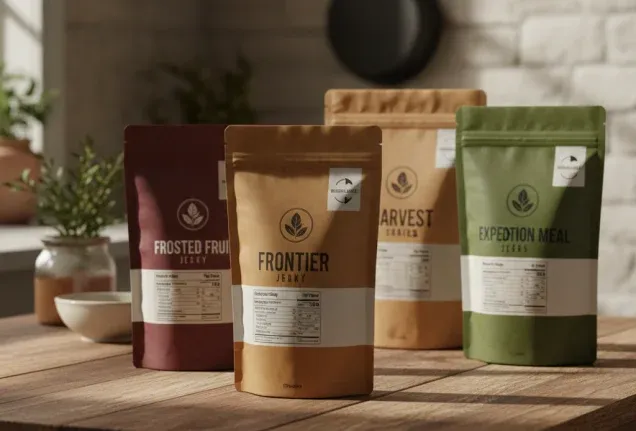
When you have to store your food items, you need something that can ① protect your goods ② maintain nutritional value for longer periods. While many storage solutions fulfil this criterion, Mylar bags are considered a smart choice more often. This is because Mylar bags are easy to use, affordable to buy, and feature excellent protective barriers.
At The Box Lane, we have been providing Mylar bags to multiple industries for many years. We have manufactured, tested, and verified multiple bags, thicknesses, and key features against food products such as Snacks, Jerky, Grains, and Freeze-Dried Products. In this blog, we are about to explore the suitability of Mylar bags for food storage, benefits, expected storage duration, regulatory requirements, and the best practices for sealing and storing.
Here is our honest and practical discussion about Mylar bags for food storage.
.webp)
What are Mylar Bags?
Mylar bags are lightweight, durable, and an easy-to-customize packaging solution. They are composed of a polyester film known as BoPET (Biaxially-oriented polyethylene terephthalate). This material possesses the following characteristics:
- High tensile strength
- Long-term stability
- Reflective properties
- Transparency
- Protective barrier
Historical Background of Mylar Bags
Mylar bags were first developed by DuPont in 1950. They were used for high-tech industrial applications and specialized purposes rather than food products. You will be stunned to know that even NASA utilized Mylar for its satellite balloons and spacecraft in the early 1960s. However, it is another topic, and we don’t want to take you that way. Let’s come back to our main topic: Mylar bags for food storage.
Why Mylar Bags are Good for Food Storage
In the food industry, multiple products and goods are packed at production sites, transported to retail stores, and sold at various physical as well as online platforms. This is a long journey, and products must remain fresh, with preserved flavor and aroma. Apart from this, food items such as tea and coffee stay on the house’s shelves for a longer time. The consumers only take a small amount daily, according to their use, and leave the rest, packed.
The packaging of food products should therefore be extraordinarily protective. It should maintain the structural integrity of goods during handling and shipment. It should also preserve the nutritional value of goods for longer periods. Apart from this, it should be resealable so users can reseal the pouch once they have taken the amount they need for everyday usage. Mylar bags offer a perfect fit for these requirements, and that’s whythey are the best pick for food products.
Global Use of Mylar: Several global food industry brands, such as Starbucks, Peet’s Coffee, and Kiddylicious, also use Mylar pouches for their products.
What Kind of Food Can Be Stored in Mylar Bags with an Expected Lifespan
Mylar bags are an excellent choice for storing a variety of dry and low-moisture food items. They block moisture, light, and gases effectively. So, there is no risk of spoilage.
Here is the complete list of the best food items to store in Mylar bags along with their expected shelf lives.
Long-Term Storage
It includes the list of items that are stored for many years for commercial or industrial usage.
|
Food Items |
Expected Lifespan |
|
White Rice |
30+ Years |
|
Hard Wheat |
30+ Years |
|
Kidney Beans |
30+ Years |
|
Rolled Oats |
30 Years |
|
Dried Lentils |
30 Years |
|
Semolina Pasta |
30 Years |
|
Freeze-Dried Meats |
25 Years |
|
Instant Coffee |
25+ Years |
|
Tea |
25 Years |
|
Sugar/Salt |
Indefinite |
Mid-Term Storage
These items will eventually degrade after some years, even if they are not exposed to oxygen. The list is here:
|
Food Items |
Expected Lifespan |
|
White Flour |
10–15 Years |
|
Non-Fat Dry Milk |
15 Years |
|
Dehydrated Apples |
10–15 Years |
|
Quinoa |
10 Years |
|
Cornmeal |
10 Years |
|
Whole Spices |
10 Years |
|
Powdered Eggs |
5–10 Years |
|
Potato Flakes |
10 Years |
|
Granola (Low Fat) |
5–8 Years |
|
Peanut Butter Powder |
5 Years |
Short-Term Storage
These items contain small amounts of fat or moisture. There is a risk that the process of deterioration and spoilage will start due to enzymatic reactions. Here are some popular items in this list:
|
Food Items |
Expected Lifespan |
|
Brown Rice |
1–2 Years |
|
Roasted Coffee Beans |
1–2 Years |
|
Raw Nuts |
1 Year |
|
Beef Jerky |
1–2 Years |
|
Whole Wheat Flour |
1 Year |
|
Chocolate |
2 Years |
|
Vegetable Oils |
1–2 Years |
|
Breakfast Cereals |
2 Years |
|
Ground Spices |
2–3 Years |
|
Seeds |
1 Year |
Benefits of Food Storage in Mylar Bags
Mylar bags have numerous practical, aesthetic, and functional benefits. They have made it easier to store surplus food for times of scarcity. They have helped the brands to purchase stock in bulk and sell it according to the consumer's needs. They have also helped families to purchase household items in large quantities and use them for their everyday needs. Modern methods such as zip-lock enclosures, heat sealing, and vacuum sealing features have an additional benefit. You can place items of your need and seal them — it is protected for years.
Here are some of the benefits of Mylar bags with respect to the food industry.
High Shelf Life: From the above tables, you must have got an idea that Mylar bags are associated with high shelf lives. It is because Mylar pouches offer an exclusive environment to goods and preserve them from the effects of environmental factors.
Excellent Protection: We have recently discussed that Mylar bags offer a protective barrier. This protection is in multiple ways. First, it protects from humidity, gases, and sunlight. Second, it protects from punctures, physical, and abrasive damage. Third, it protects from contamination, thermal fluctuations, and unintentional access to children (child-resistant designs).
Easy-to Customize: Food packaging should loudly speak that it contains something delicious, something according to the customer’s taste. Mylar bags allow it at a very reasonable price. You can customize Mylar bags to any shape, design, and style. With digital printing, you can customize the appearance of the bag to a catchy design that makes your goods hard to miss.
Cost-Effectiveness: Here, we have some good news for those who are tight on budget but need premium packaging for their food brand. Mylar is a superior choice, definitely, and you can get it at an affordable price. If you choose a professional packaging company like The Box Lane, you will have to pay for the bag only. We don’t charge anything for design and printing.
Importance of Oxygen Absorbers in Food Storage
We have stated that Mylar bags keep oxygen at bay. This is not 100% achievable in everyday storage practices. There is a risk that a little oxygen may remain in the bag while placing items or sealing. This little oxygen is enough to start spoilage. Especially for highly sensitive items, this oxygen has a very negative effect.
The solution to this concern lies in using oxygen absorbers. These tiny packets are excellent at absorbing any leftover oxygen in the bag. They eliminate risks of degradation, allowing you to store with peace of mind.
Oxygen Absorber Requirements for Mylar Bags
The table below explains which specific oxygen absorber packet is enough for which size of the Mylar bag:
|
Bag Size |
Dimensions |
Oxygen Absorber Recommended |
|
Extra Small Pouch |
3" x 4" to 4" x 6" |
50cc |
|
Small Pouch |
4" x 6" to 5" x 7" |
100cc |
|
Quart Bag |
8" x 8" |
300cc |
|
1 Gallon Bag |
10" x 16" |
500cc |
|
2 Gallon Bag |
12" x 18" |
1000cc |
|
5 Gallon Bag |
20" x 30" |
2000cc |
Regulatory Requirements of Mylar Bags for the Food Industry
While Mylar bags are an extraordinary choice for food storage, there are certain regulatory requirements. These regulations and certifications maintain transparency in Mylar usage, so the consumers are totally aware of how to use these pouches and what they offer.
Ban On PFAS and Forever Chemicals
Various EU and US state regulations strictly ban the use of PFAS for food packaging. These chemicals pose serious risks to human health as well as environmental contamination. The limits are very low, often set as lower than 25 ppb (parts per billion) by most of the authorities. We recommend that you check the Certificate of Analysis (COA) from the supplier, clearly stating that this packaging is PFAS-free.
Shift to Mono-Material Bags
EU’s PPWR (Packaging and Packaging Waste Regulation) regulates that Mylar bags must be made recyclable. For this purpose, brands nowadays are shifting towards using mono-material Mylar bags instead of standard ones that are made of multiple layers. These mono-material bags are easy to recycle and also provide the same level of protection as standard pouches.
Good Manufacturing Practices
The FDA (Food and Drug Administration) requires manufacturers to make packaging under good manufacturing practices to prevent contamination. It must not alter the ingredients of the food when stored. Additionally, the inner layer must be of safe materials that do not add any contaminants to the stored goods.
Best Practices for Food Storage in Mylar Bags
To ensure your food remains safe and preserved over extended periods, you should follow the standard storage protocols. The packaging experts at The Box Lane recommend following practices in this regard.
Store Dry Foods: Choose dry and low-fat foods to prevent spoilage and degradation.
Use Oxygen Absorbers: Use appropriate-sized oxygen absorbers to remove any leftover oxygen residue.
Don't Overfill: Leave at least 2 to 3 inches at the top to prevent strain on the pouch. It also makes sealing easier.
Label Immediately: Label the pouch immediately with the content inside, date of storage, and any special notes.
Remove Air: Press the bag and remove as much air as possible once you have filled the bag.
Seal Properly: Choose a suitable method of vacuum or heat sealing, and verify the seal is airtight.
Store at a Cool, Dry Place: Store the bags in a place away from sunlight, moisture, and heat.
What Food to Avoid Storing in Mylar Bags
Though Mylar is a great choice for storing most of the food types, there are certain limitations. Unfortunately, standard Mylar bags are not suitable for storing the following food types.
Moisture-Rich Items: Goods having high moisture content are not preserved in Mylar bags. Mold and mildew can grow on them, deteriorating the food in a few days after storage. Do not store fresh food, fruits, and vegetables in these pouches.
Fat-Rich Foods: Mylar is not a good choice for storing foods with high levels of fats and oils, such as nuts, seeds, and oily grains. These items can become rancid over time.
Fermenting Foods: The items that produce gas can puff the bag up and burst it.
Final Words
Mylar is an excellent option for storing food products. Its layered structure and protection barrier ensure the goods remain fresh, preserved, and secure. While you can store a variety of goods, the expected lifespans vary a lot. Some items remain protected for as long as 30 years, while others have a shelf span of only 1 or 2 years. Using oxygen absorbers eliminates the risks of exposure to any residual oxygen in the bag and enhances shelf life manifold. There are also certain regulatory requirements for the food industry. Choosing the bag that complies with these requirements preserves both goods and nature, preventing contamination risks. Lastly, don’t store food with moisture, fat, or fermenting characteristics, as these kinds of items are not protected in Mylar bags.
If you need high-quality, affordable Mylar bags for your food business, The Box Lane is the top pick for you. Contact us to discuss your needs.
FAQs
Is Mylar actually legal for food contact in 2026?
Yes, but it should comply with multiple rules and regulations. It should be PFAS-free, prepared with food-grade materials, and must meet the latest FDA and EU food-safety standards.
Can I store wet or oily foods if I use a larger oxygen absorber?
No, it can lead to spoilage and severe health concerns. Storing moist food in an oxygen-free Mylar bag creates an environment where Clostridium botulinum can thrive. This is a harmful bacterium, causing botulism when food is consumed. For oily items, rancidity starts immediately after storage. Oxygen absorbers can’t prevent these processes, and that’s why you should avoid storing moist or fat containig food.
Can I reuse Mylar bags once they are opened?
Yes, you can use a Mylar bag again, once it is opened. Make sure to seal it properly and use an appropriate oxygen absorber. This is generally allowed for household and everyday usage. For commercial brands, however, using fresh Mylar bags is recommended as it needs high-levels of protection.
Do I need a vacuum sealer to use Mylar bags?
A vacuum sealer is a good choice, but not necessarily needed. A vacuum sealer has a plus point as it removes bulk air. Nowadays, this job is done by an oxygen absorber excellently. That’s why using a standard impulse heat sealer is also satisfactory.
Does the temperature of my storage room really matter if the bag is sealed?
Yes, it matters a lot. It is a common rule in food science that for every 10°F (5.6°C) increase in temperature, the shelf life of your food is cut in half. If you store your bag in a warm environment, the shelf life is reduced. The ideal choice is to store your bag within a container at around 15°C.