

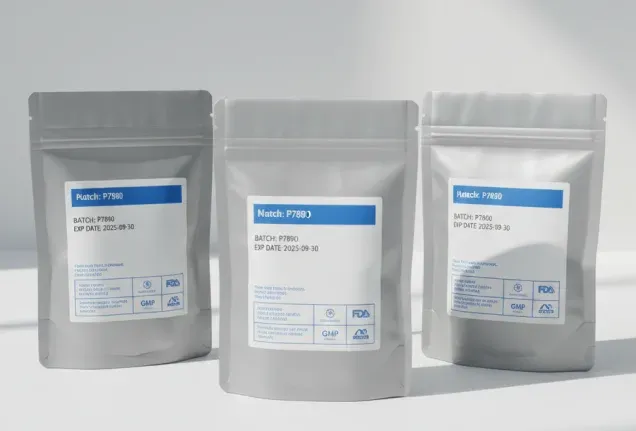
During our experience at The Box Lane, we frequently encounter a question.
Can I store medicine in Mylar bags?
The answer is yes, but you have to be very careful in this regard. Storing pharmaceuticals in Mylar bags requires extreme care. Let’s get into the detailed guide about why Mylar bags are good for storing medical products and what is the best way for long term storage.
.webp)
Packaging Requirements of Pharmaceuticals and How Mylar Meets Them
You might have heard that Mylar is one of the best packaging solutions for medical products. Here, we will prove it with facts and figures. We will understand the requirements of pharmaceutical packaging and how Mylar fulfills those requirements perfectly.
High Protective Barrier
The Requirement: Medicines are hygroscopic and photosensitive. Only after a slight exposure to moisture or light can start the breakdown process. Processes like hydrolysis or oxidation can soon render the medicine ineffective or unsafe for use. That’s why it needs an excellent barrier against these agents.
The Solution: Mylar is composed of a BoPET layered structure with an aluminum foil in between. It acts as almost impermeable to oxygen, water, and light. The WVTR (Water Vapor Transmission Rate) of Mylar bags is close to zero. There is no risk of degradation, contamination, or interference with environmental factors.
Sterility and Microbial Barrier
The Requirement: Sterilized medical devices, such as catheters, syringes, needles, etc require Gamma or EtO practices to maintain sterility until they are used. This is not possible with many traditional packaging pouches and needs something special, something that fulfills the standards of sterility needed.
The Solution: Mylar bags are robust, heat-sealable, and possess unique material properties. They allow radiation to pass easily through the pouch. They are compatible with Ethylene Oxide (EtO) and Gamma radiation sterilization practices, which is the most important need of this industry.
Chemical Inertness and Leachability
The Requirements: Medical products are highly sensitive in nature. They can be altered when they come in direct contact with chemicals, ingredients, or contaminants. The packaging should therefore neither interact with the medical ingredients inside nor leach chemicals.
The Solution: Medical Mylar bags are manufactured with specialized practices. They are 100% inert and maintain a significant barrier between the compositional agents of the bag and the medicine stored inside. Furthermore, they are tested through multiple layers before launch, so the potency of the drugs is never compromised.
Tear and Puncture Resistance
The Requirement: Apart from sterility and protection, medical packaging must also be durable. It is because these pouches cover a long journey from manufacturing to inventory, shipment, and sales. There is a risk of accidental damage at any stage of handling. The packaging must be strong enough to prevent punctures, tears, and physical damage.
The Solution: Mylar has a high tensile strength and strong composition. They are highly resistant to accidental punctures. You can expect them to withstand handling, storage, and environmental conditions with no effect on the medicines inside.
Regulatory Compliance and Child Resistance
The Requirement: There are certain regulatory requirements and standards for pharmaceutical packaging. The FDA (U.S. Food and Drug Administration), EMA (European Medicines Agency), and WHO (World Health Organization), along with the ISO (International Organization for Standardization), generally set these standards that every manufacturing company making Medical-grade Mylar bags must follow. Apart from this, child resistance is also needed for this industry to prevent accidental exposure to children.
The Solution: Mylar bags are easy to manufacture according to the regulatory requirements of the industry. Furthermore, they can feature specific patterns such as push-and-slide, dual-action, and zip-lock to make them child-resistant.
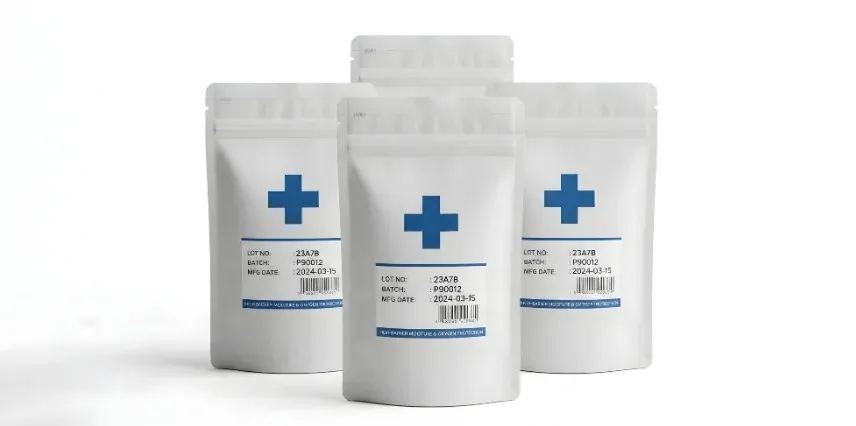
Mylar vs. Other Packaging Materials for Pharmaceuticals
This table explains why Mylar is the gold standard for pharmaceutical packaging.
|
The Requirements |
Mylar Bags |
Standard Plastic |
Glass Bottles |
|
Moisture Barrier (WVTR) |
Superior |
Moderate |
Excellent |
|
Oxygen Barrier (OTR) |
Extreme |
Low |
Excellent |
|
Light Protection |
100% Opacity |
Variable |
Poor |
|
Sterilization |
Highly Compatible |
Limited |
Excellent |
|
Durability |
High |
Moderate |
Fragile |
|
Weight & Shipping |
Ultra-Light |
Light |
Heavy |
|
Regulatory Compliance |
Full |
Standard |
Classic |
The Best Practices to Store Pharmaceuticals in Mylar Bags
So far, we have explored how Mylar bags are one of the best packaging options for medical products. Let’s now uncover the best practices to take the maximum advantage of them.
Here is what you should focus on:
Seal Perfectly: A Mylar bag is intact as long as its seal is intact. Make sure to use a high-quality impulse heat sealer to ensure a uniform airtight closure. For the pharmaceutical industry, a seal width of 5mm to 10mm is recommended, so you should keep it within this range. Adding desicants and oxygen absorbers is also recommended, as they absorb any leftover oxygen or moisture from the pouch.
Store at Stable Conditions: Place the sealed pouches in a place with minimal interference and temperature fluctuations. The ideal place is where relative humidity is 50% or lower, and the temperature is around 20°C (68°F).
Label Accurately: Label the pouch with accurate details of what’s inside. Mention the medicine type, storage date, expiry date, and any other information for transparency. Make sure to use ink with low-volatile organic compounds, so there is no chance of chemical migration from the pouch to the medicine.
Final Words
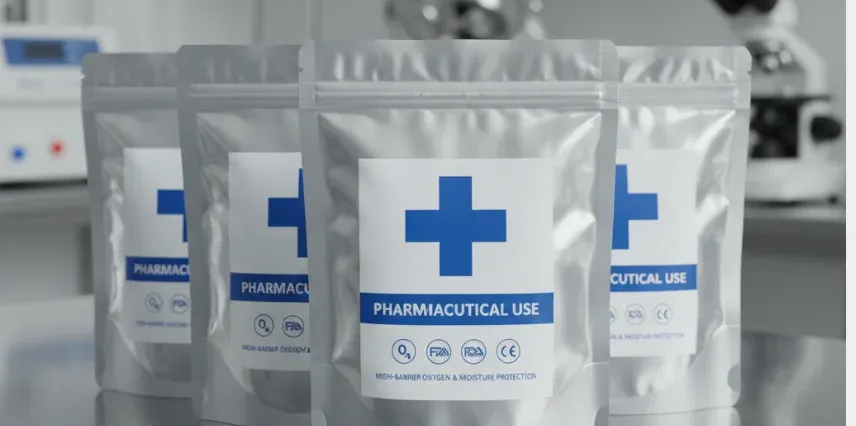
Mylar bags are one of the best packaging options for pharmaceutical products. They can store medicines, surgical tools, and other products for longer periods. They provide sterility, safety, and compliance with regulatory requirements. When compared to traditional packagings such as plastic and glass, Mylar secures the top spot for pharmaceutical packaging. To ensure your products are preserved for a long period, seal them perfectly, label accurately, and store them at optimal conditions.
If you are looking for some high-quality, medical-grade Mylar pouches, The Box Lane is the right choice for you. Contact us today to get a quote or discuss your needs.
FAQs
Are Mylar bags safe for medical products?
Yes, Mylar bags are totally safe for medical products if made under good manufacturing practices for the medical industry. They are highly protective and block oxygen, moisture, and light. They are also FDA-compliant, BPA-free, and chemically inert; there is no risk of leaching chemicals toward inside.
What is the average shelf life of pharma Mylar bags?
It depends on the sensitivity of the drugs. When stored with proper sealing and oxygen absorbers, and stored at a cool, dry place, they have a shelf life of around 5 to 20 years.
Are Mylar bags compatible with medicines that need refrigeration?
Yes, Mylar also maintains its protection and safety barrier at extremely low temperatures. That’s why it is an ideal choice for vaccines and biologics that are stored at very low temperatures.
Can I get custom-sized Mylar bags according to the dose requirements?
Yes, multiple companies like The Box Lane provide custom Mylar bags according to the requirements, quantity, and volume of the medicine stored. You can also choose the shape, size, and features accordingly.
What are the regulatory requirements of Mylar bags for Pharmaceuticals?
The bag must be manufactured from food-grade and BPA-free materials. It ensures no physical or chemical interaction with the stored ingredients inside. Furthermore, it should pass certain tests to confirm it is not leachable, eco-friendly, and can withstand a certain level of physical stress. Nowadays, many authorities recommend using eco-friendly options that are either biodegradable or recyclable.