

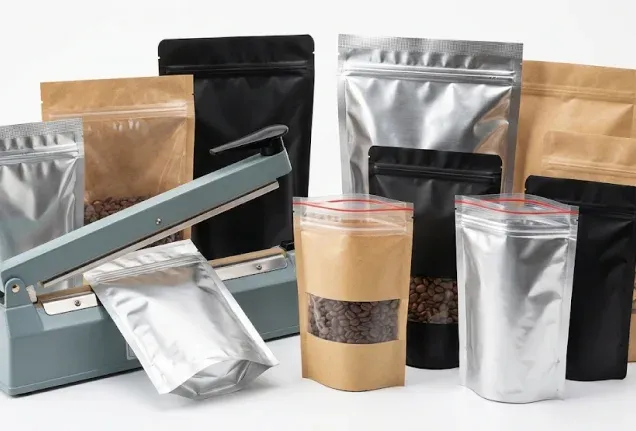
Mylar bags are one of the most popular, flexible packaging options. They can preserve food, medicine, and cosmetics for longer periods. The seal of the Mylar bag is very important in preserving the stored ingredients. If the seal is perfect and intact, the likelihood of long-term storage is increased. On the other hand, if the seal is compromised, your stored items are at risk of spoilage, degradation, and damage.
In this concise guide, we gonna explore the popular and effective sealing techniques for Mylar bags. Beyond heat sealing and zip locks, we will also discover the methods that are cost-effective, easy to handle, and sufficient to keep moisture, oxygen, and light away.
.webp)
Why Sealing is Important for Mylar Packaging
Sealing is important to create a perfect, airtight barrier. The stored ingredients are protected from the interference caused by environmental agents. This is not just important; it is essential to lock in the flavor, aroma, and nutritional value of what’s packed inside. Apart from this, proper and accurate sealing has the following benefits:
- It protects items from spoilage and degradation.
- It extends the shelf life of stored items.
- It prevents infestation and contamination.
- It maintains the structural integrity of ingredients.
- It preserves the taste, texture, and flavor of items.
Popular Sealing Techniques for Mylar Bags
The list is so long. We will only discuss the famous and effective sealing methods here. Let’s cover the list one by one.
Heat Sealing
It is the process in which heat and pressure are used to melt the top edge of the Mylar bag to create a seal. This seal is both moisture-resistant and airtight. When combined with oxygen absorbers, this method is efficient for preserving ingredients for up to 25 to 30 years.
Temperature Requirement: This process requires a very high temperature accompanied by high pressure. In general, the temperature should be around 375-425°F (190-218°C).
Methods:
Impulse Sealers: It uses a momentary pulse of electricity to melt and fuse the bag’s openings.
Hair Straighteners: It involves applying heat and pressure simultaneously. First, clamp the straightener across the top for 5–10 seconds, then slide it slowly. A perfect seal is created.
Household Iron: It uses the flat, heated bottom of the clothing iron to heat the bag and create a seal.
Direct Heat Sealers: It uses a constant heat to create a seal. This process is specifically good for thick and heavy-duty packaging.
Vacuum Sealing
This is to some extent similar to heat sealing. However, it involves some additional steps. One of the most important steps is to remove the air from the pouch before applying the seal. For this purpose, the bag is put into a vacuum pump where as much air as possible is removed. After this, the bag is then sealed with a chamber, nozzle, or handheld vacuum sealers. This process is especially good for storing items for a short period. For storing goods for a long period, using oxygen absorbers and heat sealing is recommended.
Zip Lock Sealing
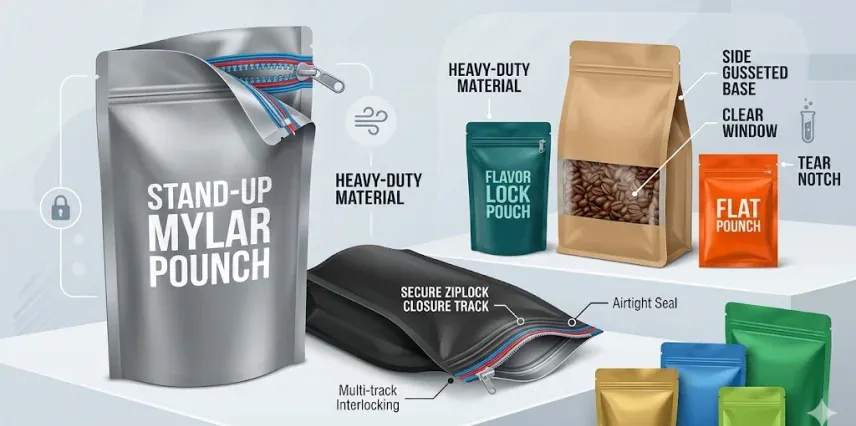
This particular technique is applied when there is a need for resealability and reusability. You might have seen zippers or zip-locks on snacks, edibles, and dried food items. These pouches are generally tear-resistant and are made to be used again and again. First, add a ziplock to the pouch, followed by creating a seal above. Together, this combo provides extraordinary safety and protection.
Zip-locks are many times used in various patterns for pouches that contain sensitive items such as drugs, cannabis, and CBD. These items are to be prevented from accidental exposure to the children, and that’s where zip-locks do the job effectively.
Clip Or Clamp Sealing
This is the easiest method for sealing Mylar bags. This process is not effective for storing the goods for longer periods. This is mostly used for temporary sealing to prevent contamination and opening of the pouch. Just place the goods inside the pouch, fold the edges, and bind it with a clamp or a clip. The edges now won’t open.
Ultrasonic Sealing
It is one of the most advanced sealing techniques for Mylar bags. It is used in commercial sectors where a bulk of pouches are to be stored for longer periods. The process involves using high-frequency vibrations that melt the pouch at a molecular level. It offers a superior, consistent protective barrier and is an ideal sealing method for long-term storage of goods.
Adhesive Sealing
This is a method that is not commonly used and doesn’t require heat. It involves using glue or adhesives to bind the two edges of a Mylar bag. The process can firmly close the opening of the bag, but it is not effective for long-term storage. Furthermore, it needs professional expertise to seal the pouches accurately with adhesive materials.
Best Practices for Sealing Mylar Bags
There are as many techniques for storing Mylar bags as you want. You have to choose the one according to pouch thickness, storage duration, and your needs. For example, if you need to store goods for a long duration, choose heat sealing or ultrasonic sealing with oxygen absorbers. On the other hand, if you have to store the goods for a short period, vacuum sealing might be the right choice.
Regardless of what technique you choose, here are the best practices you should follow.
- Leave around 4 inches at the top.
- Store dry, low-moisture food inside.
- Use appropriately sized oxygen absorbers.
- Choose a smooth, clean surface for creating a seal.
- Press the pouch to remove extra air from inside.
Conclusion
There are numerous sealing techniques for Mylar bags. Each has its own pros and cons and unique features. Some are convenient and cost-effective, while others are a bit expensive, to be afforded by settled businesses only. Similarly, some are for storage, while others are better for everyday usage. Choose the one that better suits your storage needs and the pouch’s dimensions. Follow the best practices to avoid any accidental damage and contamination.
If you need Mylar bags for your brand, The Box Lane is here for you. We can design, manufacture, and deliver every kind of Mylar bag for various industries. Contact us for further information.
FAQs
What is the easiest yet effective method to seal Mylar bags?
The best and easiest sealing method for Mylar bags involves using a hair straightener or a household iron. It doesn’t need specialized equipment and is also effective.
Is it good to use a vacuum sealer for Mylar bags?
It is good to use a vacuum sealer for short-term storage. For long-term and excellent protection, using a vacuum sealer is not a good choice at all.
How long does it take to seal a single Mylar bag?
It depends on the technique used to seal the bag. For most techniques, a Mylar bag can be sealed as fast as within 2 to 5 seconds
What is the ideal practice for sealing a Mylar bag for long-term storage?
The ideal practice is to remove the air, add oxygen absorbers, and heat seal the bag. Furthermore, place it at a cool, dry place for better results.
What can I store inside Mylar bags?
A variety of items can be stored in Mylar bags. It includes food, medicine, cosmetics, electronics, CBD, and dried fruits and vegetables.