

.webp)

Mylar is one of the most widely used packaging materials worldwide. It offers excellent protection from moisture, oxygen, and light. However, several concerns have been raised about the disposal and eco-friendliness of Mylar bags. These concerns are becoming more serious with increased environmental awareness.
This blog explores the environmental impact of Mylar bags. It covers the recycling challenges, landfill effects, and contributions towards pollution. It also discloses the positive impact of these pouches, such as reusability and durability.
What Are Mylar Bags Made Of?
Mylar bags are composed of metallized polyethylene terephthalate (PET). The innermost layer is laminated with plastic such as polyethylene. This layered structure provides the bag with:
- Durability and puncture resistance
- Protection from moisture and oxygen
- Protection from light and UV rays
- Extended lifespan of the stored products
- Odour and contamination protection
On one end, this construction provides excellent barrier properties. At the other end, it poses several challenges in recycling and biodegradation.
Why Are Mylar Bags Difficult to Recycle?
Standard Mylar bags are extremely difficult to recycle. They are not generally accepted at most of the recycling facilities. That’s why adding Mylar pouches to curbside waste bins is not a good practice. Here are some reasons why Mylar is non-recyclable.
Multi-Layer Structure: Multiple layers are bonded firmly and are difficult to separate.
Diverse Material Composition: Plastic, metal, and adhesives require separate sorting techniques.
Contamination Risk: Recycling Mylar in an ordinary facility poses serious risks. It can cause contamination and damage the machinery.
As recycling is ruled out, the only option is landfills. This is where Mylar bags are not good for the environment.
Nowadays, some organizations, such as TerraCycle, are recycling Mylar-based flexible packaging. This is made possible with the help of specialized machinery. However, the demand is so high, and the facilities are limited. That’s why a large portion still goes to landfills.
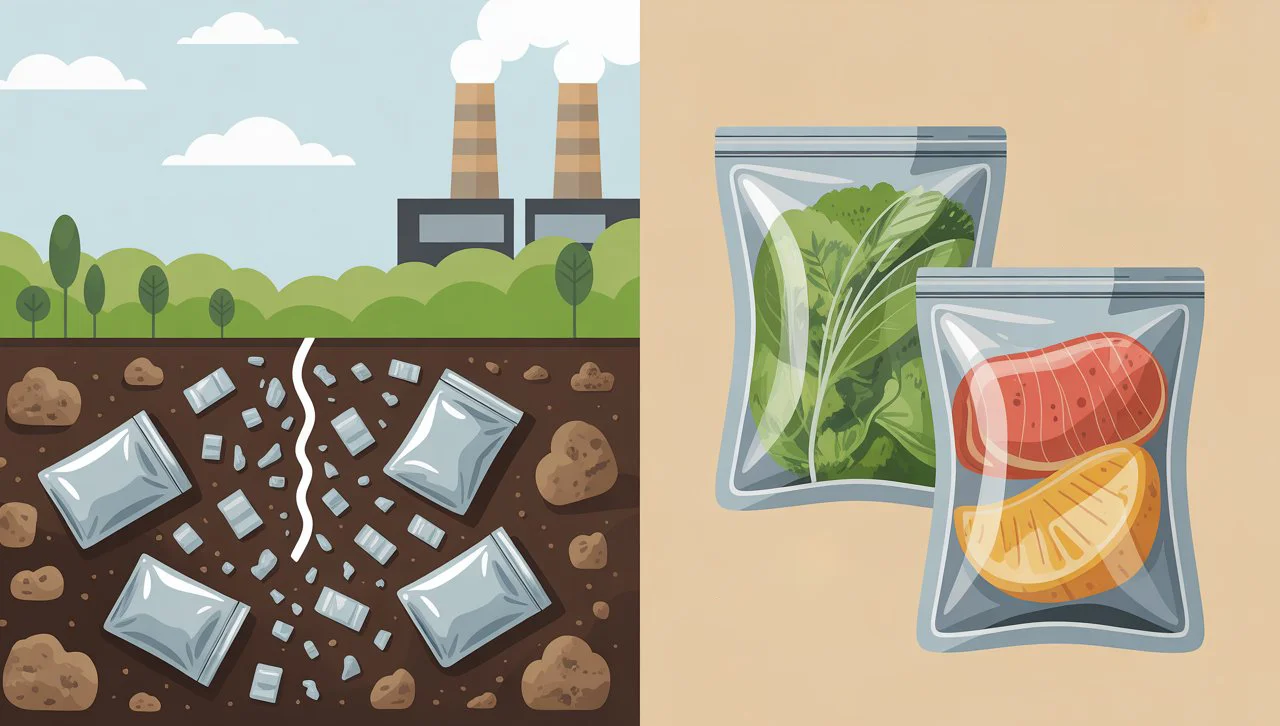
Landfill Impact of Mylar Bags
Mylar bags degrade at a very slow rate when landfilled. This is primarily due to the extremely high half-lives of plastic and aluminum, the two key elements in Mylar’s structure. The consequences of landfilling Mylar bags are very bad, including
- Long persistence in landfills
- Contribution to plastic waste
- Fragmentation into microplastics
Collectively, the above disadvantages make Mylar a contributing factor to plastic pollution.
Carbon Footprint and Lifecycle Considerations
The negative impact of Mylar bags is not limited to challenges in recycling or pollution only. Mylar is also associated with a carbon footprint in the environment from some other stages during its lifecycle.
Fossil Fuel Consumption: Mylar consumes a significant amount of non-renewable resources during manufacturing. It includes fossil fuels such as crude oil and natural gas.
Carbon Emissions: Carbon gases are released during the lamination and metallization stages. These gases are produced as a result of fossil fuel consumption.
Transportation: Energy is also consumed during the transportation and shipment of Mylar pouches. However, here Mylar is better than other packaging materials, such askraft boxes andrigid boxes. As Mylar is lightweight, it is easy to transport compared to other materials.
Sustainability Benefits of Mylar Bags
So far, we have discovered that Mylar is associated with recycling challenges and pollution. Now, let's uncover its sustainability benefits, the positive side.
Food Waste Reduction
As Mylar offers strong barrier protection, it can store the food products for years. Consumers can now put their food into a Mylar pouch and take it as needed. This prevents wastage of food due to the risk of spoilage. It can be very beneficial in waste reduction, as Mylar can efficiently store a variety of food products. It also preserves the nutritional value of food for decades.
Durability and Reusability
Mylar bags can be used multiple times. In fact, they can be used unless they are ruptured or compromised mechanically. After using it once, you can just wash the bag, let it dry, and pack your goods again. After packing, make sure you create an airtight seal with the help of an impulse heat sealer, a clothing iron, or a hair straightener. Using oxygen absorbers is also recommended if you intend to store your goods for longer periods.
As Mylar is reusable, it significantly reduces the consumption of energy and resources. These resources could otherwise be used for manufacturing new packaging items.
Tips for Responsible Disposal and Reuse of Mylar Bags
Responsible disposal can reduce environmental impact significantly. It is possible if both consumers and brands start following eco-friendly practices.
Here are some tips in this regard.
- Reuse Mylar bags if there are no punctures, holes, or apparent damage.
- Try if you can send them to specialized recycling programs such as TerraCycle.
- Avoid placing them in curbside recycling bins, as it can damage the machinery.
- Purchase the bags precisely according to your requirements.
- Shift towardseco-friendly packagingbags if they meet your needs.
.webp)
Conclusion
Mylar bags provide excellent shelf life and protection to a variety of items. But their layered structure presents several challenges to recycling and disposal. The environmental impact further highlights the need for a sustainable,eco-friendly packaging solution.
Both consumers and businesses are concerned about these environmental impacts. The result is that many industries are now shifting towards more sustainable alternatives. Mono-material poly bags, recycled paper bags, and plant-based compostable bags are some of them. This shift can be beneficial for both the environment and the businesses storing products for longer periods.
FAQs
Are Mylar bags bad for the environment?
Mylar materials are not themselves bad for the environment. Their unique, layered structure makes them bad, as they are neither recyclable nor biodegradable.
Can Mylar bags be recycled?
Yes, they can be recycled, but at specialized facilities and with specialized machinery. Ordinary curbside recycling programs don’t accept them due to their complex structure.
How long do Mylar bags take to decompose?
Mylar bags can take several decades to decompose in landfills. This is due to the high half-life of the plastic, the key element of Mylar’s composition.
Do Mylar bags contribute to microplastic pollution?
Yes, they contribute if they are placed in a garbage site or landfilled. Over time, the plastic layers fragment into small pieces that contribute to microplastic pollution.
Are there eco-friendly alternatives to Mylar bags?
Yes, there are several eco-friendly alternatives available. The popular ones include kraft paper packaging, cellulose films, and reusable containers.